If you’ve started researching custom home builders in San Antonio or the Texas Hill Country, you’ve probably encountered two different approaches: the design-build model and traditional custom home construction. They both result in a beautiful, one-of-a-kind home, but how you get there is very different.
Understanding the distinction can save you months of frustration, thousands of dollars in miscommunication costs, and a whole lot of stress along the way. Here’s an honest breakdown of what each model looks like, what the tradeoffs are, and how CKC Custom Homes approaches the process.
What Is Traditional Custom Home Construction?
In the traditional model, the design phase and the building phase are handled by two separate companies and often two separate contracts.
Here’s how it typically works:
- You hire an architect or design firm to create your plans and drawings.
- Once plans are complete (or nearly complete), you shop those plans to builders and collect bids.
- You hire a custom home builder to execute the construction.
- You may also hire a separate interior designer to handle finishes, fixtures, and furnishings.
At each stage, you’re the connector. You’re relaying information between your architect, your builder, and your designer and hoping everyone is working from the same assumptions about budget, timeline, and intent.
The Upside of the Traditional Approach
The Downside of the Traditional Approach
The fall throughs tend to show once construction begins. Architectural plans that looked beautiful on paper don’t always account for how a home will actually be built or what it will realistically cost. When the architect and builder aren’t in the same room during design, costly change orders, structural surprises, and budget overruns are common.
Communication breakdowns between three separate firms (architect, builder, interior designer) are one of the most frequent complaints we hear from homeowners who’ve been through it.
What Is a Design-Build Firm?
A design-build firm consolidates architecture (or architectural design), construction, and often interior design under a single contract and a single team. You work with one company from the first sketch to the final walkthrough.
Rather than designing a home and then handing it off to a builder, the design and construction teams are in constant communication which means every design decision is evaluated in real time for constructibility, budget alignment, and timeline feasibility.
What This Looks Like at CKC Custom Homes
At CKC, we operate as a full-service, design-build custom home firm. That means when you work with us, you have:
- In-house interior designers who work alongside our construction team from day one — not brought in at the end to “decorate”
- A single point of contact who coordinates your entire project: design, permitting, vendor meetings, selections, and construction
- A land-first design philosophy, where your homesite’s topography, views, and natural light directly shape your architecture before a single plan is drawn
- Builder-led guidance at every decision point, so you’re never choosing finishes or floor plan features in a vacuum
The result is a home where the architecture, finishes, and construction all feel intentional because they were designed together from the beginning.
What This Looks Like at CKC Custom Homes
Design-Build
- Number of contracts: One
- Communication: Centralized
- Budget accountability: Unified
- Design-to-build alignment : Built in
- Interior design integration: Integrated from day one
- Change order risk: Lower
- Timeline predictability: Higher
- Best for: Clients who want a streamlined experience
Traditional
- Number of contracts: Two or more
- Communication: Owner-coordinated
- Budget accountability: Split between firms
- Design-to-build alignment : Often reactive
- Interior design integration: Typically added later
- Change order risk: Higher
- Timeline predictability: Variable
- Best for: Clients with existing architect relationships
The Hidden Cost of Disconnected Teams
One of the most under-appreciated risks in traditional custom home construction is what happens when a home is designed by people who don’t build, and built by people who weren’t in the room when decisions were made.
An architect may specify a particular ceiling detail or window configuration that is structurally complicated or prohibitively expensive, not because they’re careless, but because cost and constructibility aren’t always their primary lens. When a builder is in the room during design, those conversations happen before anything is committed to paper.
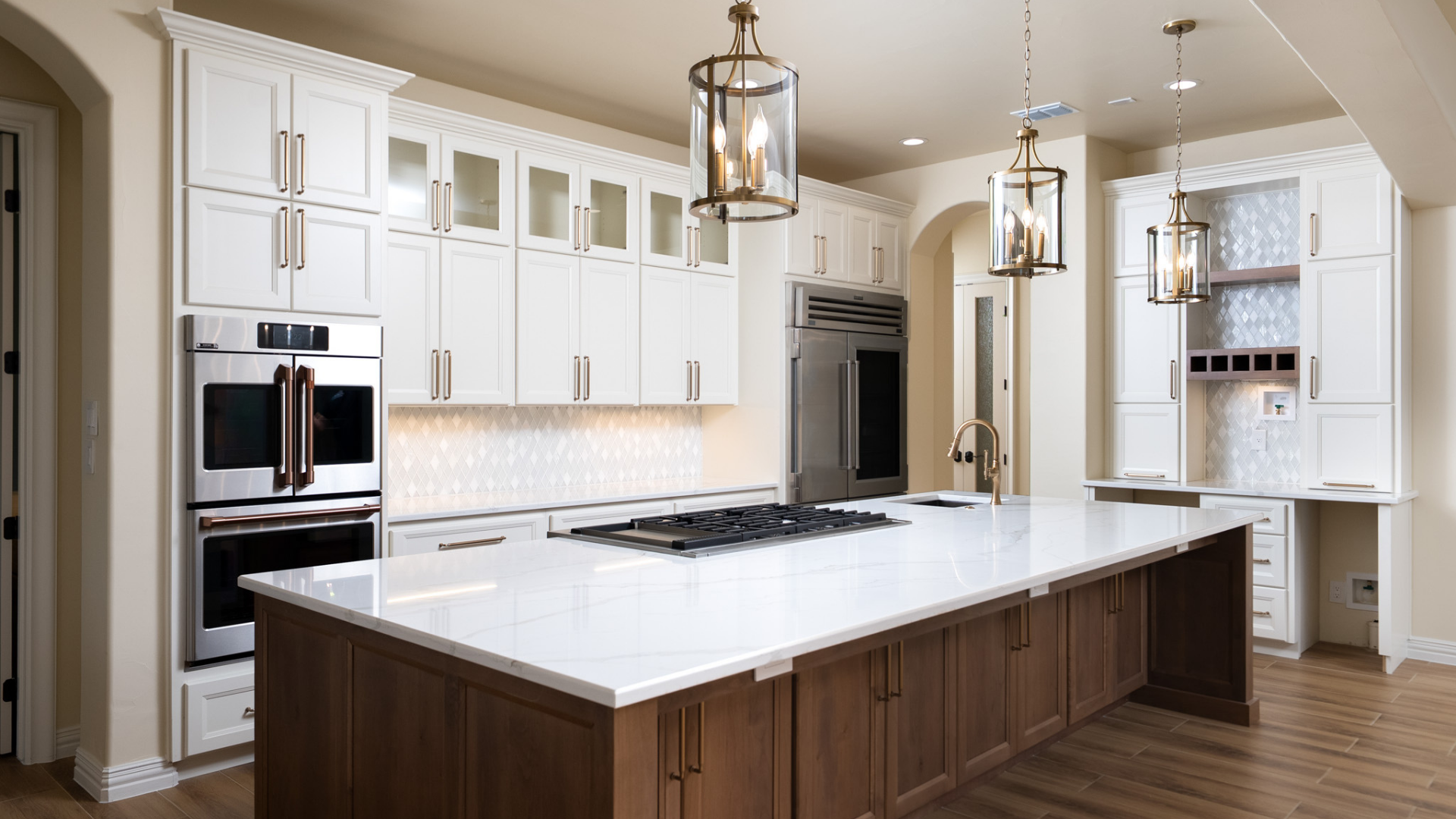
The same is true of interior design. When finishes, fixtures, and furnishings are selected after construction documents are finalized, you sometimes discover that the kitchen island you fell in love with doesn’t fit the ceiling soffit that was already framed. Or that the tile you chose for the primary bath creates a budget problem that ripples into other selections. Integrated design-build firms eliminate these disconnects by design, not by accident.
Is Design-Build Right for You?
The design-build model tends to be the stronger fit for most custom home clients, particularly if:
- This is your first custom build and you want guidance, not just a contractor
- You want a cohesive aesthetic where architecture and interiors feel unified
- You value a single point of accountability over your entire project
- You want budget conversations to happen before you’re emotionally invested in a floor plan
- Your lot has unique features (topography, views, trees, drainage) that should shape your design
If you already have an architect you’ve worked with for years and prefer to manage the process yourself, the traditional model may serve you well. But for clients building in San Antonio, Boerne, Canyon Lake, and throughout the Texas Hill Country, the design-build approach tends to produce fewer surprises and more satisfied homeowners at the end.
What to Ask Any Builder Before You Sign
Whether you’re evaluating design-build firms or traditional builders, ask these questions:
- Who owns the relationship between design and construction? If the answer involves multiple companies, ask specifically who resolves disputes or misalignments between them.
- Is interior design integrated, or is it a separate contract? Many builders who call themselves “design-build” still outsource interiors.
- How are change orders handled? Ask for examples from past projects.
- Who will be my primary point of contact throughout the project? The answer should be a specific person, not “our team.”
- Can I speak with past clients who built a similar home in a similar budget range?
The CKC Difference
CKC Custom Homes has served San Antonio and the Texas Hill Country for more than two decades as a family-owned, award-winning design-build firm. We’re not a production builder offering upgrades on a preset plan. And we’re not a general contractor handing off your home’s interiors to a separate firm.
We are a true design-build partner, with in-house designers, a builder-led process, and a singular focus on building homes that reflect the land, the lifestyle, and the legacy of the people who will live in them.
If you’re exploring what it takes to build a custom home in San Antonio or the surrounding Hill Country communities, we’d love to start with a conversation.