
If you’ve been researching home builders in San Antonio or the Texas Hill Country, you’ve probably noticed that almost every builder calls themselves “custom.” It’s one of the most overused words in residential construction and one of the most misleading.
The reality is that there’s a significant spectrum between a true custom home builder and a production builder, and knowing where a builder actually falls on that spectrum will affect your home’s design, quality, timeline, and long-term value in ways that aren’t apparent until you’re already under contract.
At CKC Custom Homes, we’re a true design-build firm, meaning the architecture, interior design, budgeting, and construction are all coordinated from the very beginning, under one roof, by one team, rather than being managed by separate companies. Many of our clients come to us after purchasing acreage in Boerne, Canyon Lake, San Antonio, New Braunfels, or throughout the Texas Hill Country, and they want a builder who will honor that land rather than impose a floor plan onto it. Over the past 22 years and more than 200 completed homes, we’ve seen what works, what doesn’t, and where most builders fall short.
This is a transparent comparison, not a sales pitch. We’ll tell you what production builders do well, where the gaps are, and what separates a genuine custom home builder from the rest. You can decide what matters most for your situation.
What Is a Production Builder?
A production builder, sometimes called a volume builder or tract builder, constructs homes at scale. Their business model depends on building many homes simultaneously, efficiently, and profitably by standardizing as much as possible: floor plans, materials, subcontractors, and processes.
National and regional production builders operate at this level throughout the San Antonio market, alongside many regional builders running a handful of communities with fifty to a hundred closings per year.
Production builders typically offer:
- A library of preset floor plans (sometimes dozens of options)
- Design centers where buyers choose finishes from curated packages
- Communities where the builder controls the lots
- Streamlined financing through preferred lenders
- Warranties backed by the volume and infrastructure of a large company
None of that is inherently bad. It’s a model designed to deliver a predictable product at a competitive price point, and for many buyers, that’s exactly what they need.
What Is a True Custom Home Builder?
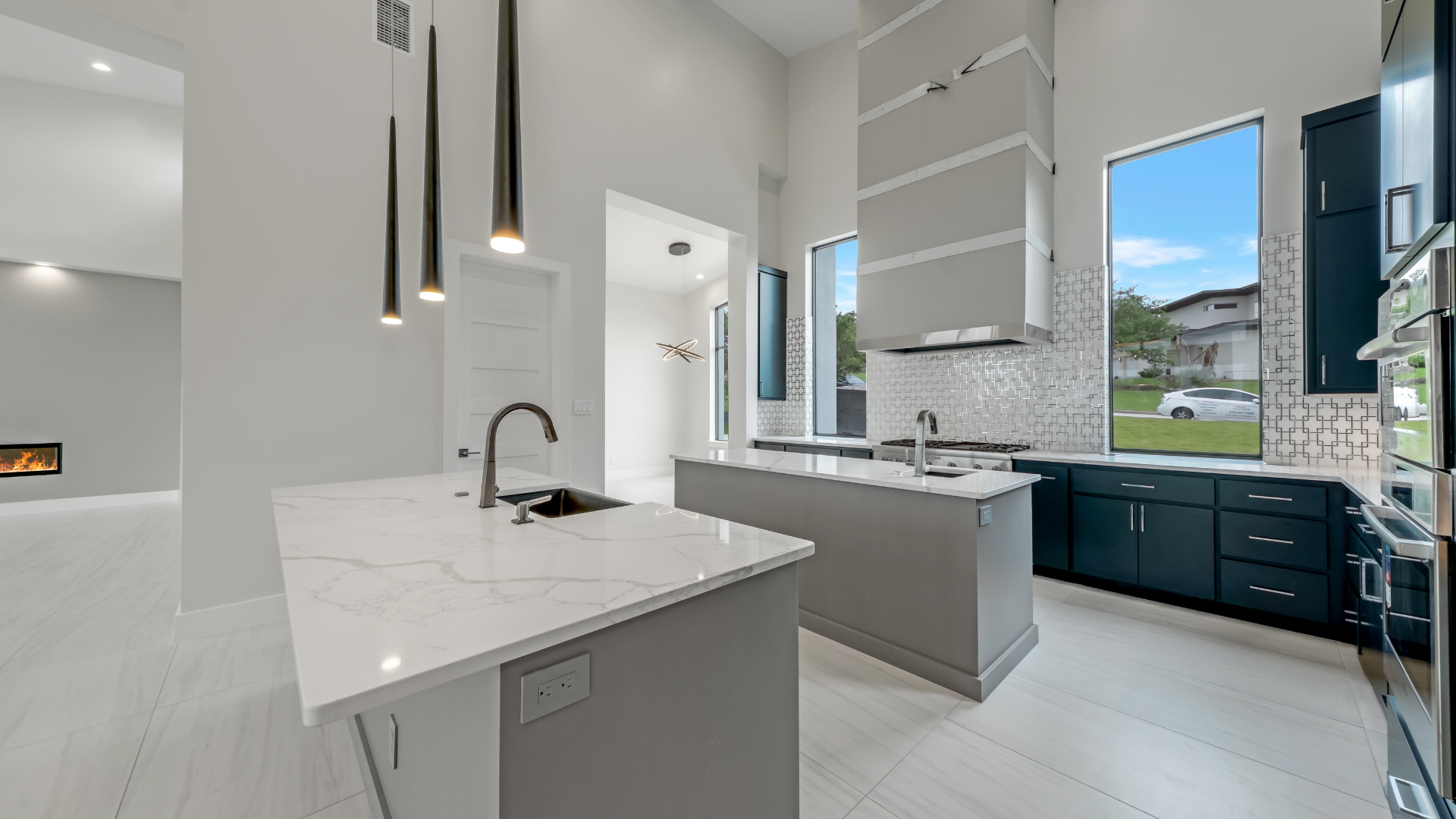
A true custom home builder starts from scratch. There is no floor plan library, no preset finish package, no community where you choose lot 14 or lot 22. Every home is designed and built specifically for one client, one lot, one set of needs.
The process is collaborative by nature. You’re not selecting from options, you’re making decisions. Floor plan, ceiling heights, window placement, room proportions, structural details, interior finishes, outdoor living, all of it is created around how you live, what you value, and what the land you’re building on makes possible.
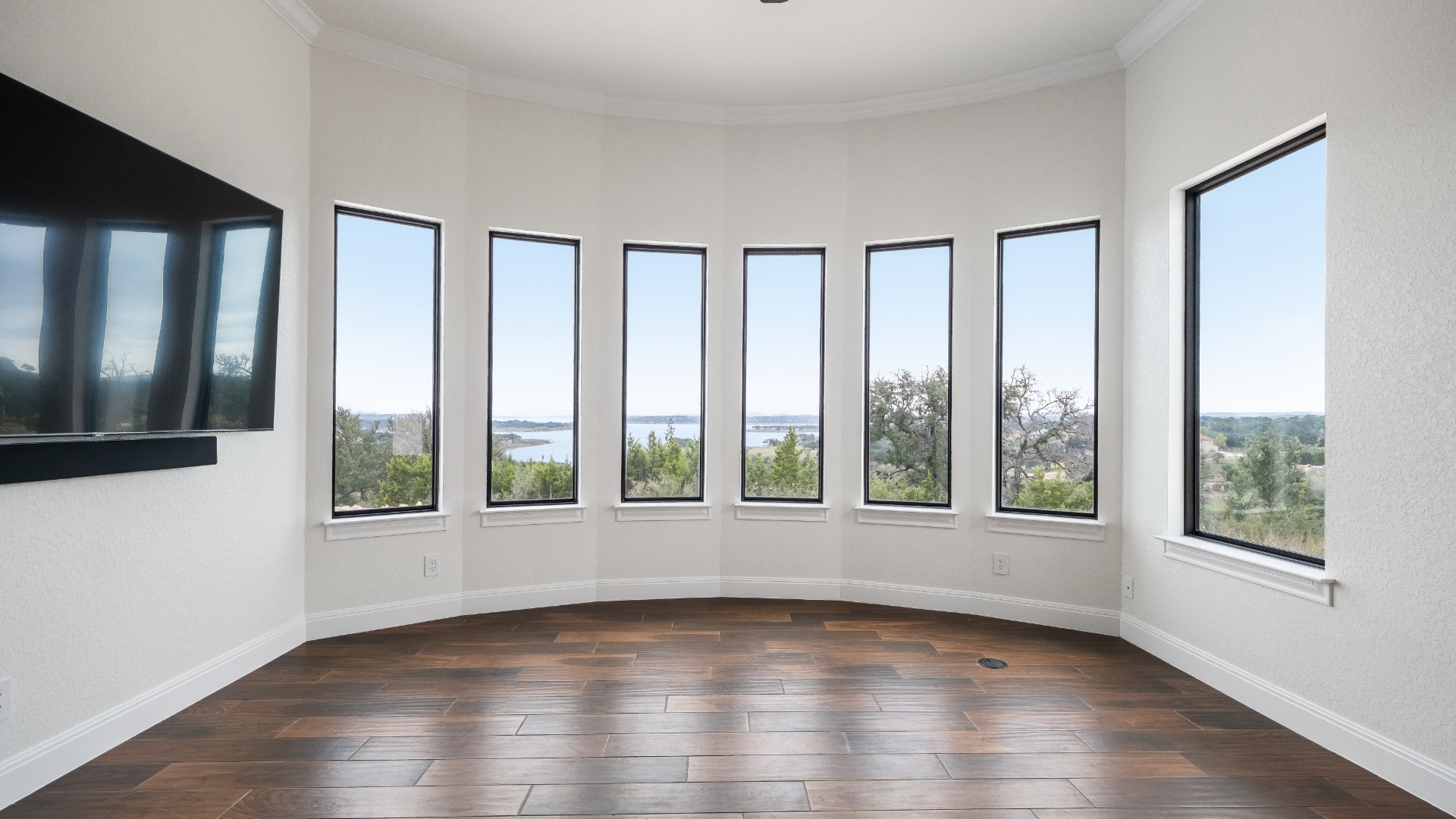
The goal isn’t simply to build a larger home, it’s to create a home that feels unmistakably yours every time you pull into the driveway. That might mean a home oriented to capture a Hill Country view through a wall of windows, designed around a grove of mature live oaks that production builders would have cleared, or planned from the start to include a wine room, golf simulator, wellness space, or multigenerational guest suite. These aren’t afterthoughts or expensive upgrades. They’re design conversations that happen at the beginning of our process, not surprises tacked on at the end.
Unlike most builders, CKC clients work with an in-house interior design team from the very start of their project. Selections aren’t rushed into a single design center appointment, they evolve alongside the architecture so every finish, fixture, and material feels intentional rather than assembled. It’s a distinction that shows in the finished home.
True custom builders work with a much smaller number of projects per year. That’s not a limitation, it’s the model. You cannot do deeply personal, highly detailed work at volume. The attention a custom builder gives each project is only possible because they’re not running thirty projects at once.
Where the Line Gets Blurry: Semi-Custom Builders
Between production and true custom sits a large and somewhat murky middle ground: the semi-custom builder.
Semi-custom builders offer more flexibility than production builders, you can often modify floor plans, swap out finishes beyond a preset menu, and sometimes make structural changes. But there are still defined limits. You’re working within their system, their supplier relationships, their preferred subcontractors.
Many builders who call themselves “custom” are actually semi-custom. That’s not a criticism, semi-custom can be a strong fit for buyers who want more input than production allows but don’t need (or want) to design from a blank page. The problem is the lack of clarity. When every builder uses the word “custom,” it becomes meaningless, and buyers make decisions based on a label rather than an honest understanding of what they’re buying.
The right question isn’t “are you a custom builder?” It’s: “What, specifically, can I change about my home, and what can’t I change?”
A Direct Comparison: What Actually Differs
Floor Plan Flexibility
Production builders offer a fixed menu. You pick Plan A, B, or C, and make selections within it. Some allow structural modifications for a fee, but the core layout is predetermined.
Custom builders design your floor plan around your life. If you need a home office with a separate entrance, a kitchen island oriented to the backyard, a primary suite on the main floor, or a guest wing that functions independently — those aren’t upgrade requests. They’re design conversations.
Material Quality and Sourcing
Production builders achieve price efficiency through standardization. They buy cabinetry, flooring, fixtures, and appliances in bulk, at volume pricing, from a defined supplier list. The result is consistent and consistently middle-of-the-road, unless you pay significantly for upgrades.
Custom builders source materials appropriate to each project. That might mean locally quarried limestone, reclaimed wood beams from a specific region, appliances from a brand the production center doesn’t carry, or tile selected on a sourcing trip. The baseline is different because the intent is different.
Subcontractor Relationships
Production builders use subcontractors who specialize in moving fast across many identical homes. Speed and repeatability are the priorities.
Custom builders work with craftspeople whose skills match the complexity of the work. Trim carpenters, tile setters, and finish crews on a luxury custom home are doing work that requires a different level of skill and are selected accordingly.
Site and Land Integration
This is one of the most underappreciated differences, particularly in the Texas Hill Country.
Production builders build communities on lots they’ve already prepared, typically graded flat or gently sloped to accommodate their standard plans. The land is adapted to the home.
Custom builders design the home around the land. If your lot has a dramatic elevation change, a view corridor, a cluster of heritage oaks, or a creek boundary, a good custom builder treats those as design opportunities, not obstacles. The home feels like it belongs there because it was designed to belong there. If you already own land or are actively searching, our Build on Your Lot process is designed specifically for you.
Process and Communication
Production builders have a defined, streamlined process that moves efficiently but leaves limited room for meaningful input once you’re past the design center stage. Your primary contact may change as the project moves from sales to construction to warranty. You may tour your home monthly and communicate mostly by portal.
Custom builders, at least the good ones, treat communication as a core part of the service. At CKC, clients have a single point of contact across the entire project. We coordinate design, construction, vendor meetings, and selections so you’re never chasing information across three departments. You can learn exactly how that works on our process page.
Timeline
Production builders move fast when they’re ready to move. Once your slot in the schedule is set, homes are frequently completed in five to nine months. The tradeoff is that you’re on their timeline, not a timeline built around your needs.
Custom builders take longer, most luxury custom builds in the San Antonio and Hill Country market run 12 to 18 months. That time is spent doing something production builders don’t: designing your specific home, working through the details, and building something that didn’t exist before
Price
This is where the conversation gets honest.
Production builders offer a lower entry price point, and for good reason. Standardization, volume purchasing, and efficient labor models reduce costs. A new production home in San Antonio’s suburbs can start in the $300,000s and scale from there.
Custom homes cost more. The design work, the material quality, the skilled labor, the personalized process, and the single-project focus all carry a premium. In the San Antonio and Hill Country market, true luxury custom builds typically start around $500,000 and scale significantly based on size, site complexity, and finish level.
What’s harder to quantify is long-term value. A custom home on a thoughtfully selected lot, designed with enduring architecture and quality materials, tends to appreciate and differentiate at resale in ways a production home in a sea of similar houses rarely does.
What Most Builders Won't Tell You
A few things that tend to get glossed over in builder conversations:
Upgrades add up fast. Production builders advertise base prices that are designed to attract attention. By the time most buyers finish the design center, adding the flooring, the countertops, the appliances, the lighting package they actually want, the final price is often 20 to 40 percent higher than the starting number. Some buyers find they’ve priced themselves into a custom home budget while building a production home.
“Included features” vary widely. What one production builder includes as standard, another charges extra for. Compare total costs at your actual finish level, not base price.
Semi-custom modifications have limits. If you’re told you can “customize” a plan but discover mid-process that the change you want requires a structural revision the builder won’t do, that’s a problem that should have been surfaced before you signed.
The lot matters more than the home. In San Antonio’s suburban sprawl and the Hill Country alike, a well-chosen lot, on a street that holds value, with natural features, privacy, or views, will appreciate in ways that a home on a mediocre lot won’t. Production builders own the lots. Custom builders let you choose yours.
Who Should Consider a Custom Builder?
You’re likely a fit for a true custom home builder if:
- You have (or are acquiring) a specific lot in San Antonio, Boerne, Canyon Lake, the Texas Hill Country, or surrounding communities
- You’ve toured production homes and found them “almost right” but never perfect
- You have a vision for how you want to live that doesn’t map onto a preset floor plan
- You’re building a home you intend to stay in for a decade or more, or pass on to your family
- Quality of materials and craftsmanship matter to you as much as price per square foot
- You want a process with real guidance, not just a design center appointment
- You want architecture, interiors, and construction managed by one integrated team from day one
About CKC Custom Homes
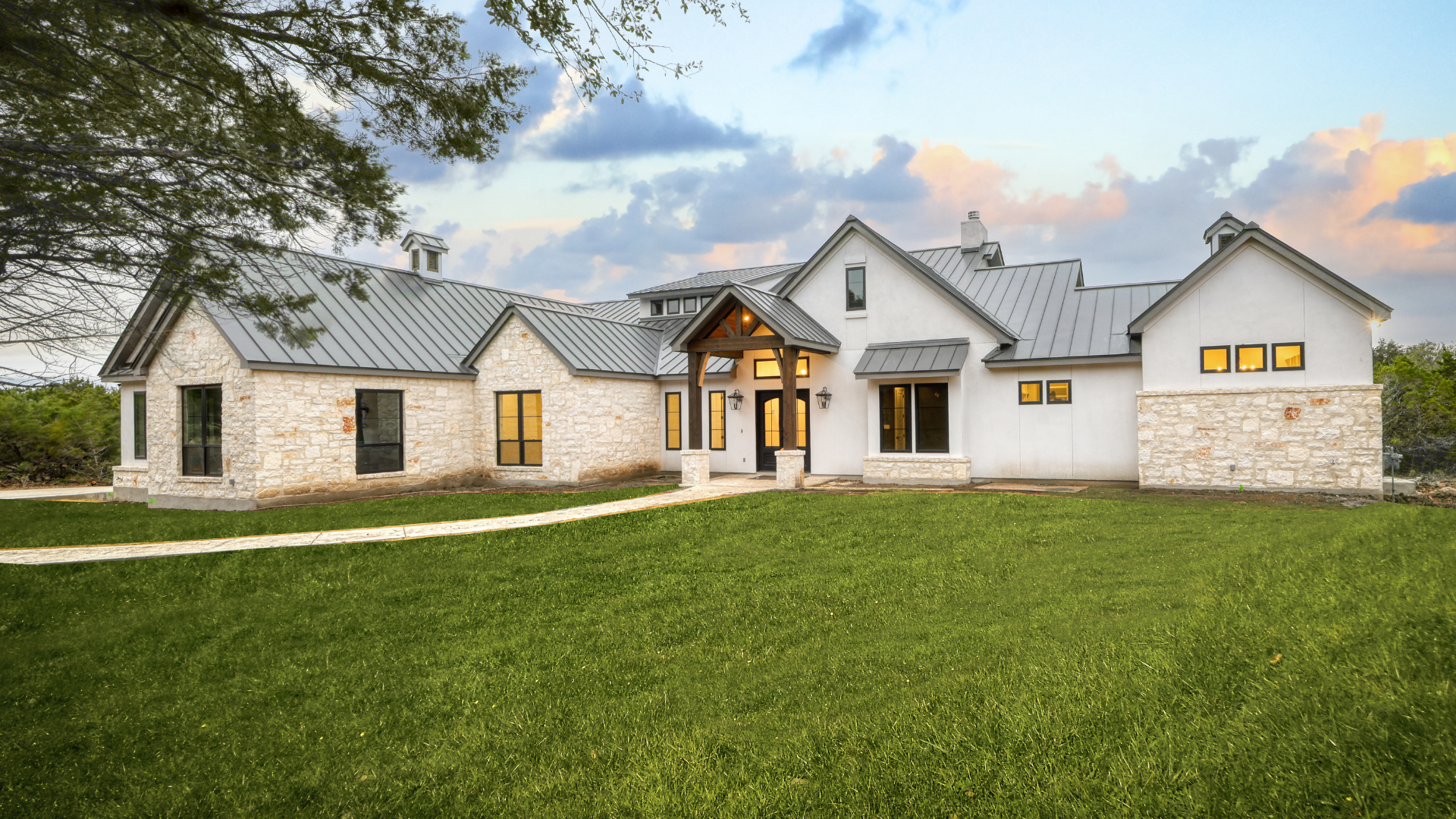
CKC Custom Homes is a family-owned, award-winning design-build firm serving San Antonio and the Texas Hill Country for more than 22 years and over 200 completed homes. We are not a production builder with a plan library. We don’t run a design center with tiered finish packages. We are a true design-build firm, with an in-house interior design team, a builder-led process, and a land-first design philosophy that treats every homesite as the foundation of every design decision.
From homes built around century-old oaks and Hill Country ridgelines to residences designed for multigenerational living, wine rooms, wellness spaces, and seamless outdoor entertaining, every CKC home begins with one question: how do you want to live?
Building a custom home should feel exciting, not overwhelming. Whether you’re still searching for land or already have a lot and architectural ideas in mind, we’d love to help you explore what’s possible.