
1. Orientation
Which Direction Does the Lot Face?
In a climate where summer temperatures routinely top 100°F, lot orientation may be the single most consequential factor in long-term comfort. The direction your lot faces and the direction your home’s primary living areas and windows will face determines how much solar heat you gain throughout the day.
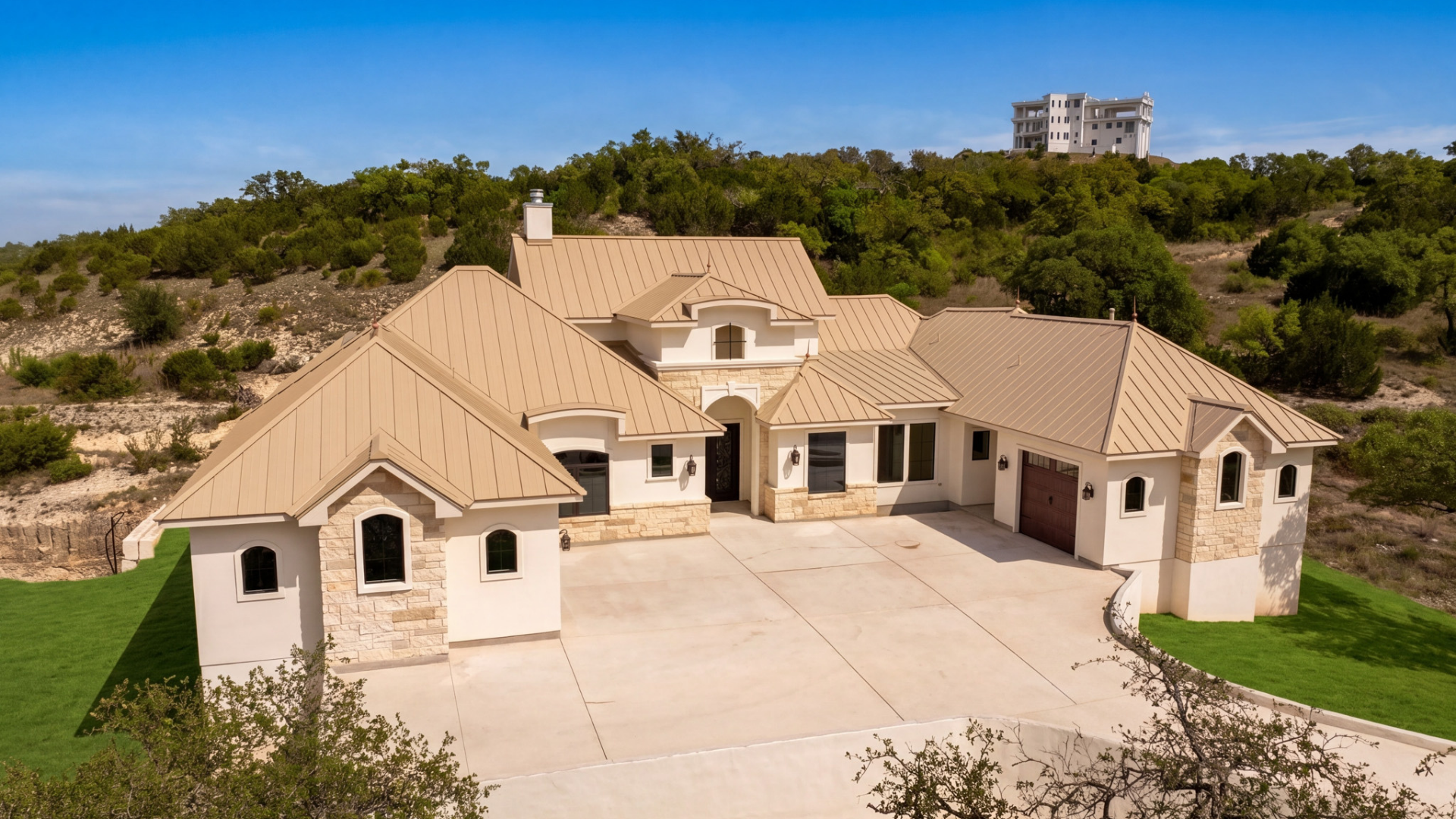
A south-facing slope or building pad is the gold standard. At CKC, we often encourage clients to think beyond the house itself and consider how they’ll actually live on the property. A south-facing orientation not only improves energy efficiency but can dramatically impact the way natural light moves through the home, how outdoor living spaces function, and how comfortable the home feels throughout the year.
In winter, a south-facing home captures low-angle solar warmth passively, reducing heating costs during mild Hill Country winters. In summer, roof overhangs can be designed to block the high midday sun while still allowing light into the interior. A south-facing orientation also gives you maximum flexibility with solar panels, should you want them.
An east-facing lot is the next best option. You’ll get gentle morning sun and relief from the brutal late-afternoon heat.
West-facing lots are the most problematic. Western exposure in Central Texas means your home’s main face takes the full force of afternoon sun from 2 p.m. to sunset, exactly when ambient temperatures peak. This dramatically increases cooling loads and can make outdoor living spaces on the west side of the home nearly unusable without extensive shade structures.
A north-facing lot keeps the home shadowed for much of the day, which can be a benefit in summer but leaves passive solar gain off the table in winter. North-facing slopes also tend to be cooler and moister — which can be lovely, but also means slower drying after rain, potentially more erosion, and sometimes more cedar encroachment.
Pro Tip
Bring a compass app on your site visits and stand on the proposed building area. Note which direction the slope faces and where the afternoon sun will be. Walk the lot at different times of day if you can or at least arrive around 3 p.m. to feel the western solar exposure firsthand.
2. Topography
Understanding the Slope and Terrain
The Hill Country is defined by its topography and that topography will define your build. Understanding slope percentage, ridge position, and drainage direction is essential before any lot purchase.
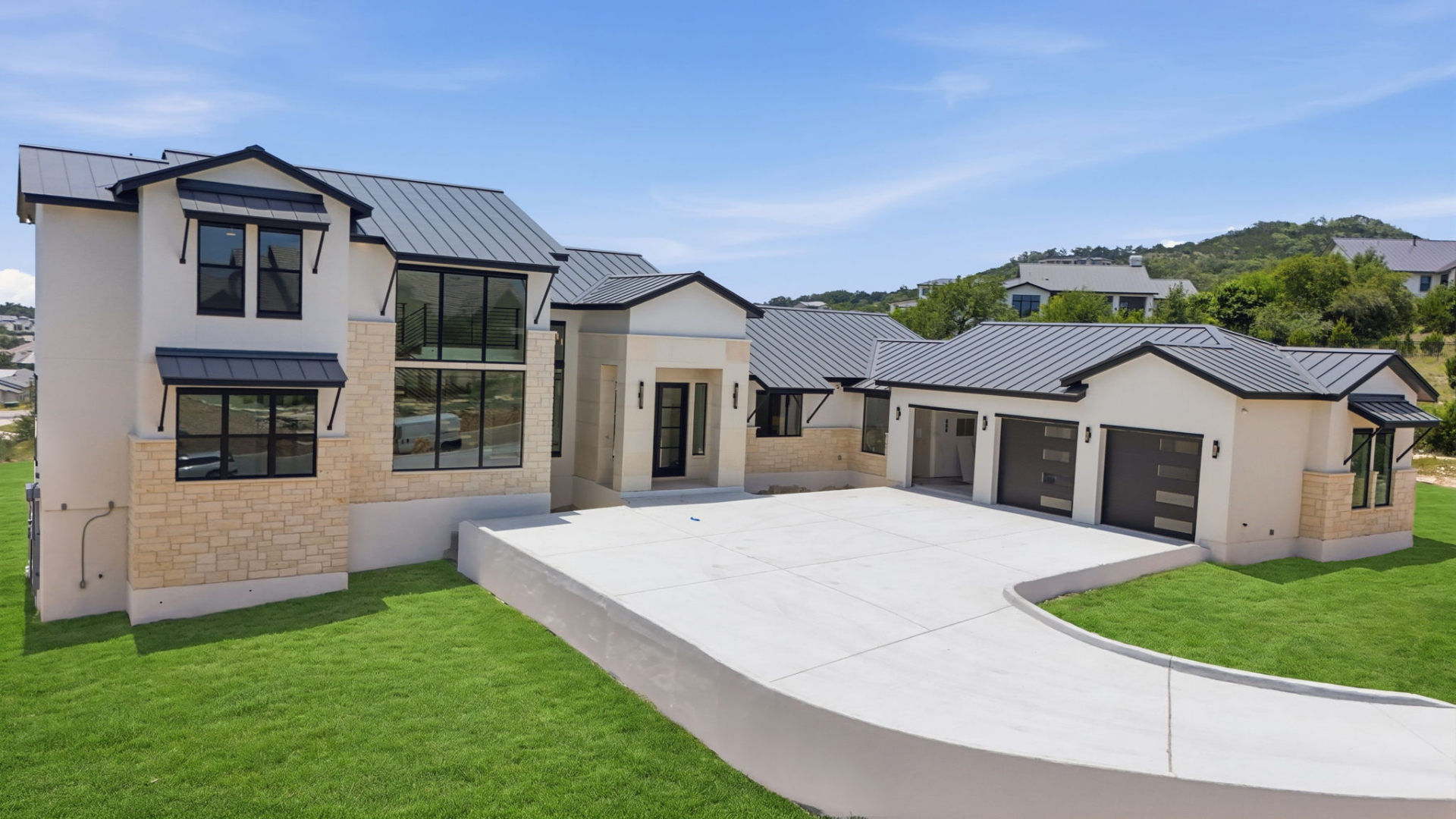
Some of the most timeless Hill Country homes are positioned gently along the natural slope of the land, where the architecture feels connected to the landscape rather than imposed on it. Lots with gentle grades often allow for better drainage, more usable outdoor living, and a more seamless relationship between the home and surrounding views.
Gentle slopes of 2–8% are ideal for most residential construction. They provide natural drainage away from the home, reduce grading costs, and allow for standard foundation systems. Slopes in this range also make landscaping, driveways, and septic system installation far more straightforward.
Moderate slopes of 8–15% are workable but will add meaningful cost to your build. You may need retaining walls, a stepped foundation, or creative site planning to carve out a usable building pad. That said, a well-executed home on a moderate slope can be spectacular by offering elevated views and a dramatic hillside aesthetic that flat lots simply cannot provide.
Steep slopes above 15–20% require significant civil engineering. One of the biggest surprises we see with Hill Country lots is how dramatically site conditions can affect the overall build experience. A lot that appears manageable online can quickly require extensive site preparation, retaining walls, or rock excavation once evaluated in person. While dramatic terrain can create breathtaking architecture and views, it’s important to understand the long-term investment required to build responsibly into the landscape.
Watch Out
Dramatic terrain can be visually captivating in listings but always ask your builder to walk the site before you close. What looks like a minor slope in photos can translate to $40,000–$80,000 in added site prep costs, expenses that aren’t obvious until you’re already under contract.
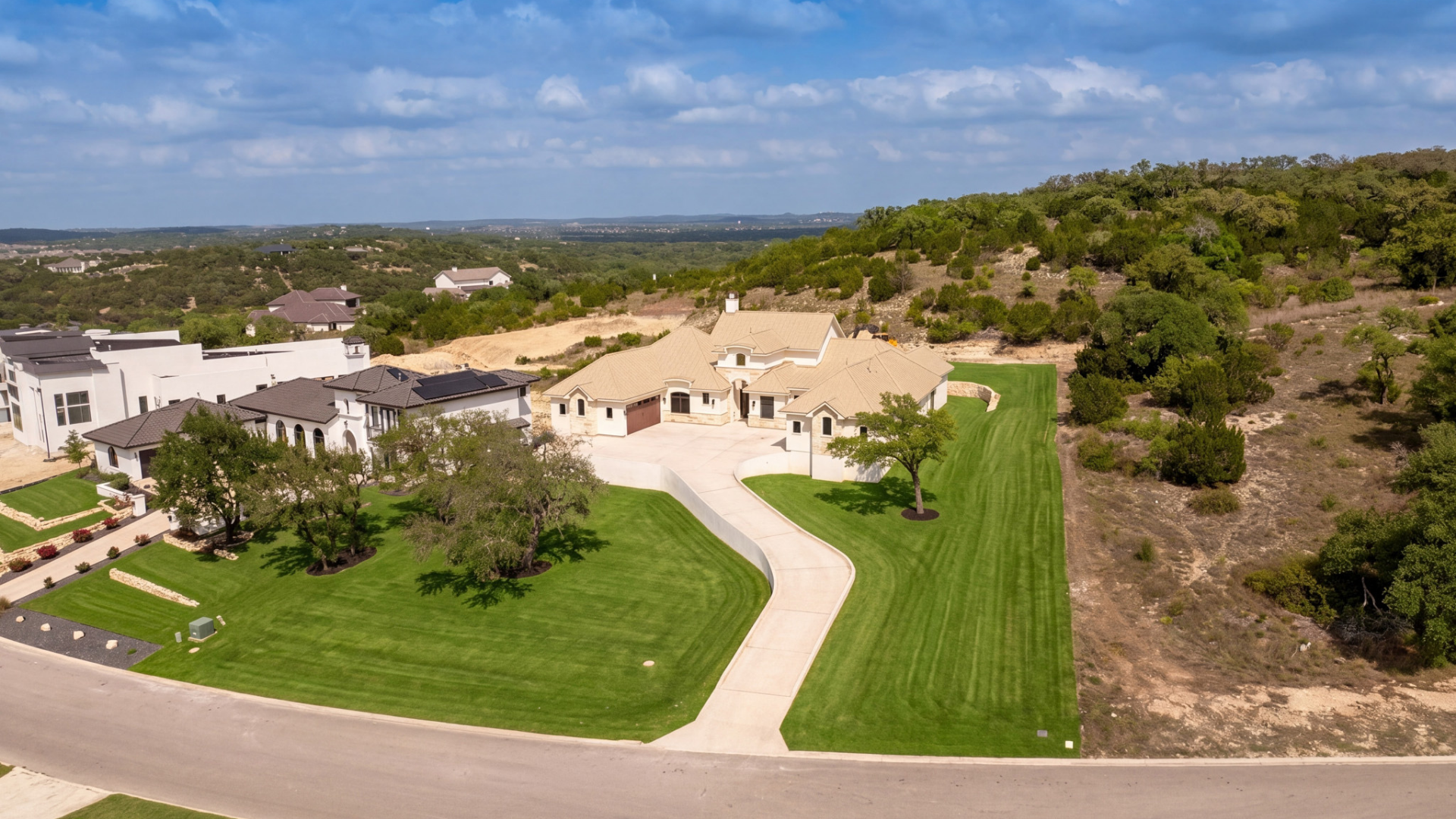
Also evaluate where you are on the landscape. Ridgeline lots offer panoramic views and excellent drainage but are fully exposed to wind, a real consideration when Hill Country storms roll through. Valley and draw lots often have more shade and lush vegetation, but they also collect water and can flood. The sweet spot for many buyers is a mid-slope position. These are high enough for views and drainage, sheltered enough to avoid the worst wind exposure.
Pay close attention to which direction water flows across the lot. You want runoff moving away from where your home will sit, not toward it. A simple visit after a rain event can reveal drainage patterns that no survey map will show you.
3. Soil & Foundation
Limestone, Caliche, and What's Beneath Your Feet
The Hill Country sits atop the Edwards Plateau, and the geology beneath your lot will directly affect your foundation options, your septic system, and your landscaping costs. Don’t skip a soil and rock evaluation.
Much of the region is underlaid with Cretaceous-era limestone, sometimes covered by a thin veneer of sandy loam or clay. Limestone bedrock can be both a blessing and a challenge. On the positive side, it’s extremely stable. Homes built on bedrock rarely experience the foundation shifting that plagues clay-heavy soils in the Dallas–Fort Worth area. On the negative side, if that limestone is close to the surface, say, within 12 to 18 inches, trenching for utilities, digging footings, and installing a septic system may require blasting or rock-cutting equipment.
Caliche is another common soil type in the Hill Country. This is a hardened calcium carbonate layer that can be impenetrable to standard trenching equipment and hostile to plant roots. If your lot has significant caliche deposits near the surface, factor in the cost of breaking through it for any underground work.
In contrast, lots with deeper topsoil, particularly along creek bottoms or in sheltered valleys, offer excellent growing conditions. They may also have expansive clay soils that swell when wet and shrink when dry. This type of soil requires a pier-and-beam or post-tension slab foundation designed to accommodate movement, adding cost, but protecting your home’s long-term integrity.
4. Vegetation
Cedar, Live Oak, and the Landscape You're Buying
The vegetation on a Hill Country lot tells you a great deal about its history, its water availability, and how much work you’ll face getting it ready to build and maintain. Two species define the landscape more than any others: Ashe juniper (almost universally called “cedar” by locals) and live oak.
The vegetation on a property often tells the story of the land itself. Mature live oaks, natural grasses, and thoughtfully preserved cedar clusters can create incredible privacy, filtered light, and a sense of arrival that makes a property feel distinctly Hill Country.
Cedar is both iconic and invasive. A lot thick with cedar will require significant clearing before you build and will demand ongoing management thereafter. Cedar is a heavy water consumer, drawing down the shallow aquifer and crowding out native grasses. A good cedar-clearing program, combined with controlled burns or mechanical removal, can dramatically transform a lot. Many times, a lot-clearing will reveal beautiful limestone formations, improve views, and increase the property’s carrying capacity for wildlife and livestock.
That said, don’t dismiss cedar entirely. A thoughtfully managed stand of cedar provides excellent privacy screening, windbreaks on exposed ridgelines, and winter thermal protection on the north and west sides of a home. The key is selective clearing; removing enough to open sightlines and improve hydrology while leaving strategic clusters for shelter and screening.
Live oaks, by contrast, are a treasure. These slow-growing, long-lived trees provide canopy shade that can reduce cooling costs significantly. A mature live oak shading a home’s west or south face is worth thousands of dollars in passive cooling value. Before you buy, walk the lot carefully and identify the significant trees. Understand where your home building pad will be positioned relative to those trees, and factor in the cost of tree protection during construction.
Also look for the presence of native grasses such as little bluestem, sideoats grama, and Texas wintergrass. Their presence signals relatively healthy soil with good organic matter, a sign that the land hasn’t been overgrazed or degraded.
5. Water
Water Access, Wells, and Drought Resilience
Water is everything in Central Texas, and how you’ll access it on your lot deserves careful review before you commit to a purchase. The Hill Country sits above the Trinity and Edwards aquifers, but depth to water and well productivity vary enormously by location.
If the lot is served by a rural water cooperative or municipal water supply, verify the connection availability, tap fees, and monthly minimums. Some co-ops have waiting lists, and fees can run $3,000–$8,000 or more just to connect.
If you’ll need a private water well, research neighboring well logs through the Texas Water Development Board database before you buy. Well logs are public record and will tell you what depths neighboring wells are hitting productive water, what yields they’re producing, and what the static water level is. In granite areas near Llano or Mason, wells may need to go 300–500 feet to find reliable water. In the limestone formations around Fredericksburg or Kerrville, productive water can sometimes be found at 100–200 feet, but there are no guarantees.
Seasonal creeks, stock tanks, and rainwater harvesting can supplement or in some cases replace well water for non-potable uses. Rainwater harvesting is legal and encouraged in Texas, and a well-designed system with adequate cistern capacity can supply all potable water for a household in areas that receive 28–34 inches of annual rainfall, typical for much of the Hill Country.
Drought Consideration
The Hill Country experiences prolonged drought cycles. A lot that looks lush in a wet year can see wells drop or fail during multi-year droughts. Ask sellers about well performance during the 2011–2012 drought. It was one of the worst on record. Also verify water rights for any surface water on the property.

6. Views & Privacy
Long Views, Privacy, and the Neighbor Question
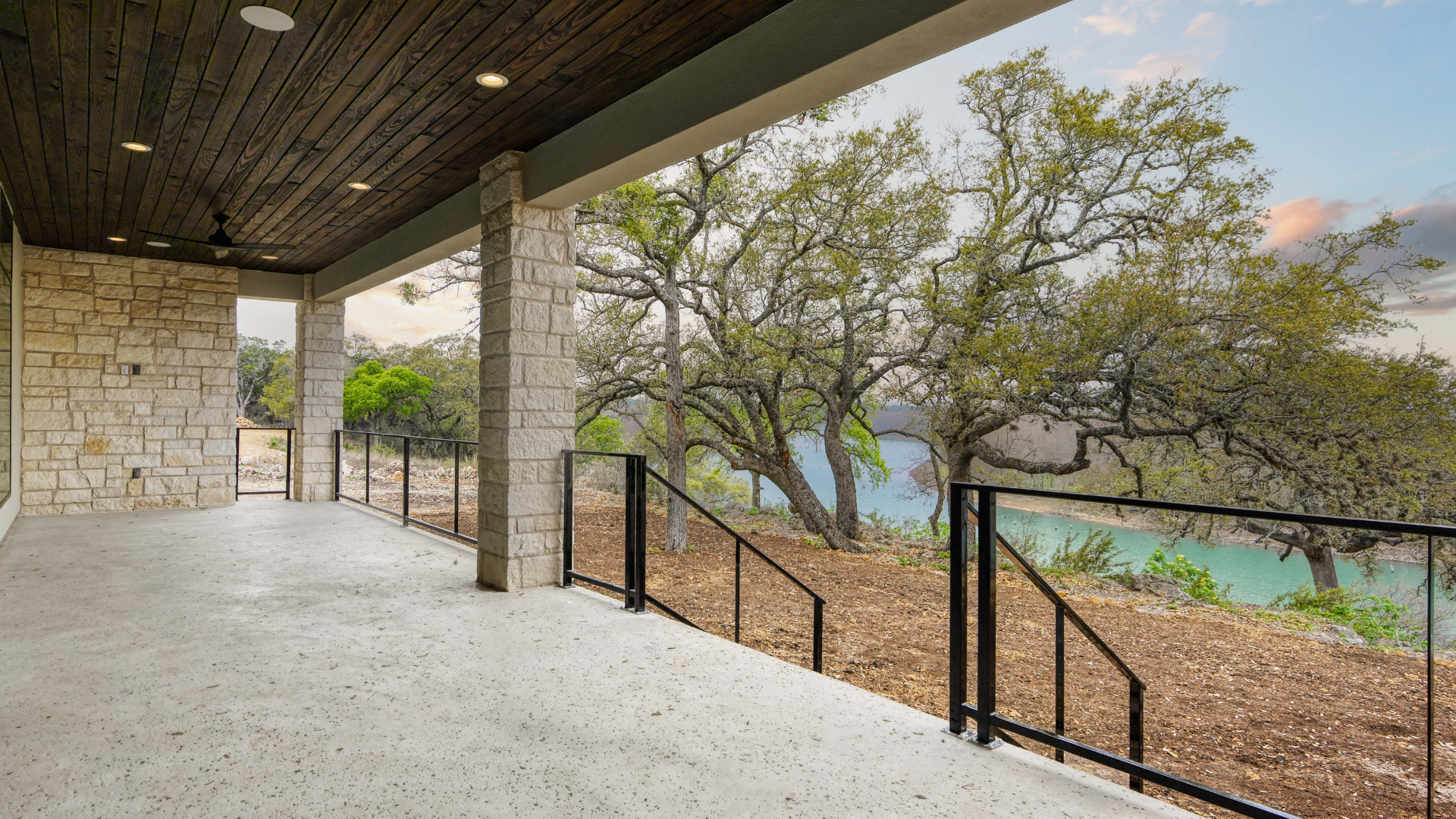
A sweeping Hill Country view is one of the primary reasons people buy land here and it’s worth thinking about carefully. Views are not guaranteed to last, and privacy is not automatically assumed.
When evaluating a viewshed, don’t just look at what’s visible today. Look at what’s buildable on the property in your sightline. If the ridgeline you’re looking at is part of a 1,000-acre ranch, your view may be secure for decades. If it’s a 50-lot subdivision, the lot directly across the valley from yours may have a home on it within three years. Review the plat maps, deed restrictions, and any conservation easements that affect adjacent parcels.
Privacy is a two-way consideration: your ability to live without feeling observed and your ability to enjoy your land without visual intrusion from neighbors. In many Hill Country subdivisions, lots are 5–20 acres, which provides natural spacing. But terrain plays a huge role. A neighboring home on a ridge can look directly down onto a lot that feels otherwise private from the road.
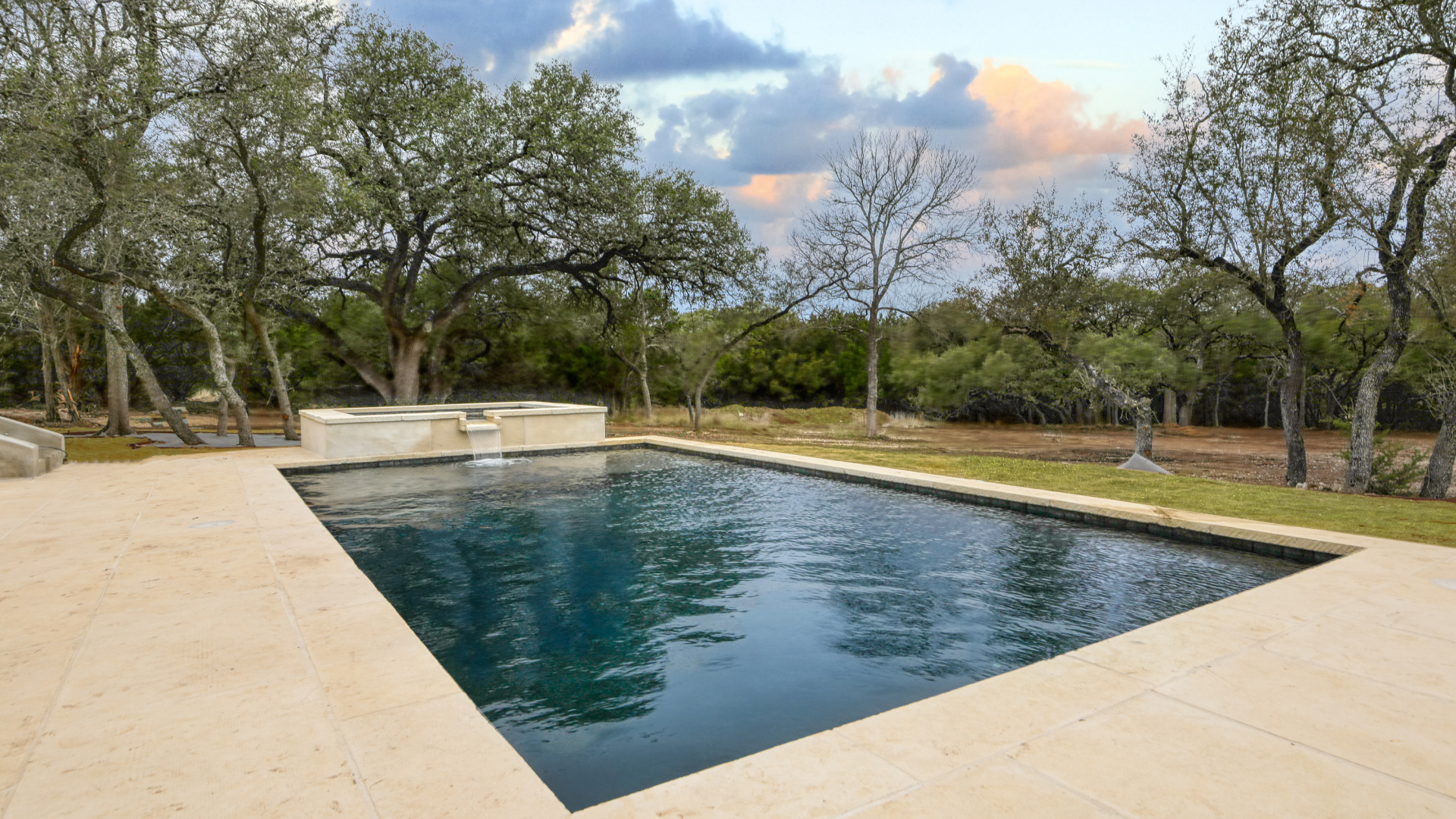
Think about view corridors relative to your home’s position. The best building pads often sit just below a ridgeline rather than on top of it. You want to look for something far enough down to be protected from wind and to feel sheltered, but high enough to capture the view. This “just below the ridge” positioning is a classic Hill Country building strategy that combines the best of both worlds.
7. Drainage
Flash Floods, Drainage, and FEMA Flood Maps
This cannot be overstated: the Texas Hill Country is one of the most flash-flood-prone regions in the United States.
The combination of shallow soils over impermeable limestone, steep terrain, and intense convective thunderstorms creates conditions where low-lying areas can go from dry to raging within minutes. Flood evaluation is non-negotiable for any lot purchase.
It’s a good idea to check the FEMA Flood Insurance Rate Maps (FIRM) for any lot near a creek, draw, or valley. Lots within the 100-year floodplain (Zone AE or Zone A) carry significant implications for construction, insurance, and long-term risk. Even lots in Zone X (outside the mapped floodplain) can experience flooding in extreme events. The Hill Country regularly sees rain totals that exceed what FEMA models anticipate.
Walk every drainage feature on the lot. Even a small, seemingly dry creek bed deserves respect. “Dry” drainage features in the Hill Country carry water infrequently but with tremendous velocity and volume when they do flow. The historic high-water marks on boulders and tree trunks along creek banks can tell you more about flood risk than any map.
Look for signs of erosion like bare soil on slopes, down-cut channels, or undercut banks. That indicates where water is actively working. A lot with well-managed drainage and established grass cover on its slopes will handle rain events far better than one that’s been cleared, overgrazed, or left without ground cover.
8. Utilities & Access
Power, Septic, Roads, and Getting There
The romance of Hill Country land can obscure some very practical questions about what it costs to service that land. Before you buy, get clear answers on every utility.
Electric service in the Hill Country is generally provided by one of several electric cooperatives such as City Public Services (CPS) Energy, Pedernales Electric Cooperative (PEC), Bandera Electric, or Bluebonnet Electric, among others. Most developed rural areas have overhead lines within reasonable distances. But “within reasonable distance” can still mean a $15,000–$40,000 extension cost if your lot is set back from the main road. Sometimes it’s a good idea to get a line extension quote from the co-op before closing. Off-grid solar with battery backup is increasingly viable and may be cost-competitive, but it requires careful load planning and a significant upfront investment.
Septic systems are the norm on most rural Hill Country lots, and the shallow limestone that characterizes much of the region can complicate installation. Standard gravity-fed septic systems require sufficient soil depth for a drain field, typically 36 inches or more of suitable soil above the water table or bedrock. Where soil is thin, an aerobic treatment unit (ATU) with spray irrigation may be required, which is more expensive to install and requires ongoing maintenance and a licensed service contract.
Ask whether the lot has a septic permit or perc test on file with the county health department. If not, commission one before purchasing. A failed perc test on a gorgeous lot can mean it’s unbuildable for residential use without a very expensive engineered system.
Evaluate the road access carefully. County roads and private easements in the Hill Country range from well-maintained chip-seal to rutted caliche tracks that require a high-clearance vehicle in wet weather. If your lot is accessed by a private easement, review the easement agreement for maintenance responsibilities. You can even talk to neighbors who share the road about how costs are split and how well everyone gets along.
9. Wildlife
Wildlife Corridors, Ag Exemptions & Habitat
One of the Hill Country’s great draws is its wildlife with white-tailed deer, wild turkey, golden-cheeked warblers, painted buntings, ringtails, and an abundance of native pollinators. Understanding the ecological context of your lot can enhance your enjoyment and, in some cases, your tax situation.
The agricultural exemption (commonly called the “ag exemption” or wildlife exemption) is one of the most powerful tools for Texas rural landowners. Qualifying land is appraised at its agricultural productivity value rather than market value, which can reduce property taxes by 80–95% on land that qualifies. The threshold for wildlife management designation in most Hill Country counties is typically 5–20 acres, and the practices required (brush management, supplemental feeding, census counts, and habitat improvements), align naturally with good land stewardship. Ask whether the lot currently carries an exemption and how to maintain it.
Position your home site with wildlife movement in mind. Major oak motts, creek corridors, and brushy draws are natural wildlife travel routes. Siting your home to overlook rather than bisect these corridors allows you to enjoy the wildlife activity while minimizing disruption to animal movement. A home tucked into the upland edge of a creek bottom, with a long porch facing the creek draw, often delivers the most wildlife viewing per dollar.
If golden-cheeked warbler or black-capped vireo habitat is present on the lot, be aware that clearing mature trees in those areas may trigger Section 7 or Section 10 review under the Endangered Species Act. Your Realtor can help you understand whether this applies.
10. We Can Help
Lot Appraisals and Custom Home Layouts
The right lot becomes the foundation for everything that follows — the way your home captures the morning light, the views you gather around at sunset, the breezes that move through outdoor living spaces, and the connection your family feels to the land for generations to come. At CKC Custom Homes, we believe the homes that feel the most timeless begin with understanding the property itself.
We invite you to contact us about your custom home projects where we can suggest lots in the area, review lots you are already considering, and help you consider layouts for the land.
Frequently Asked Questions
What is the best lot orientation for a home in the Texas Hill Country?
South-facing lots are generally considered the best orientation for the Texas Hill Country. They allow a home to capture low winter sun for passive heating while enabling roof overhangs to block high summer sun. East-facing lots are a close second, providing gentle morning light and shielding the home from brutal afternoon heat. West-facing lots are the most challenging, as they receive the full force of afternoon sun during peak temperature hours.